
- All
- Product Name
- Product Keyword
- Product Model
- Product Summary
- Product Description
- Multi Field Search
Views: 0 Author: Site Editor Publish Time: 2026-03-17 Origin: Site


High speed slitting machines and traditional slitting machines do the same job. They work in different ways. High speed models use special rotary blades. They have tension control systems. They use automated roll handling. This helps them cut faster and more accurately. These machines often link to smart manufacturing setups. This lets people watch them in real time. Traditional machines need manual adjustments. They work slower. Recent industry data shows over 65% of manufacturers use automated slitting machines now. The market for high speed slitting machine technology is growing fast. Companies pick high speed solutions for big jobs and automation. Traditional machines are better for smaller budgets and simple tasks.
High speed slitting machines work faster and cut more precisely. They are best for companies that need to make a lot of products.
Traditional slitting machines cost less and are simpler to use. They are good for small businesses.
High speed machines use automation, so they need fewer workers. This saves money and helps make more products quickly.
High speed machines are harder to take care of. They need skilled workers and regular checks to keep working well.
Picking the right machine depends on how much you need to make, your budget, and what your business needs. Think about these things before you choose.
A high speed slitting machine works much faster than older machines. When companies use these machines, they notice a big change. More people want high speed slitting machines every year. The need for fast work is growing in places like label factories. High speed slitting machines can go as fast as 500 meters each minute. Older machines usually only go 300 meters each minute. This means you can make twice as much without hiring more people. The table below shows how the two types compare:
Metric | High Speed Slitting Machines | Traditional Models |
|---|---|---|
Operational Speed | Up to 500 m/min | Typically 300 m/min |
Order Change Time | Minutes | Tens of minutes |
Material Waste at Startup | Low-loss start-up | Higher waste |
High speed slitting machines cut very neatly and well. For example, battery tape is thin and sticky, so it is hard to cut. High speed slitting machines use razor cutting and ultrasonic blade cleaning. This lets them cut at 300 meters each minute and make 40% more. The coil size stays the same every time. In another example, drink label makers changed orders in less than three minutes. They used to take one hour. They also used their machines 50% more and had no mistakes.
New high speed slitting machines, like the ones from Jiangsu Lanmec Technology Co., Ltd., have smart features. Workers can set up how the machine cuts and let it run by itself. Things like automatic tension control and remote checks help keep the work good. These machines can switch jobs fast and remember settings. This means less waiting and more work done. Automation means you need fewer workers and can save money.
A high speed slitting machine helps when you need to make more. It does the slitting and rewinding by itself, so it can keep going. This means it can handle more material easily. Companies can make more products without hiring extra people. This saves money for businesses that want to grow.
High speed slitting machines cost a lot more than traditional ones. Companies might pay $10,000 for a simple machine. Some advanced systems can cost over $100,000. This price covers the machine and its special technology. Many small businesses think this is too expensive. They have to plan their money before buying one.
High-speed slitting machines: $10,000 to $100,000+
Traditional slitting machines: Lower starting cost
High speed slitting machines have advanced parts and controls. These machines need more care to keep working well. Workers must check tension control, edge trim, and bearings often. The table below shows some common problems:
Challenge | High-Speed Machines | Traditional Machines |
|---|---|---|
Tension Control | Needs careful management for quality | Can handle more variation |
Setup Time | Longer due to complex systems | Quicker, but manual |
Operator Skill Shortages | High demand for skilled workers | Easier to operate |
Bearing Wear | Faster wear from higher speed | Slower wear |
Edge Trim Control | Needs precise adjustments | Simpler to manage |
Legacy Control Systems | Can be outdated and hard to fix | Easier to maintain |
If workers do not take care of these machines, they may not work well. The machines could make mistakes in the final product. Companies need to check and fix them often.
Using a high speed slitting machine needs special training. Workers must learn how to use the controls and stay safe. Training takes two to four weeks. It can cost $2,000 to $5,000 each week. Safety is very important because these machines can be dangerous. Workers must follow OSHA rules and use safe steps all the time.
Operator training is needed for safety.
OSHA rules say workers need special training for slitting equipment.
Good training helps stop accidents and keeps work going well.
Companies must hire skilled workers to get the best results from high speed slitting machines.
Traditional slitting machines do not cost as much money. Many businesses like them because they are cheaper to buy. Small factories and new companies often pick these machines. They can start working without spending a lot. Companies save money on the machine and setting it up. This makes traditional slitting machines a good choice for people with less money.
One big plus is that traditional slitting machines are simple. Workers think these machines are easy to use. The controls are clear and do not need hard training. People can learn to use the machine quickly. Many small businesses like these machines because they do not need experts. Simple machines help workers make fewer mistakes.
Tip: Simple machines let new workers learn fast and save money on training.
Traditional slitting machines only need easy care. Most jobs are just checking blades, cleaning, and adding oil. These steps help the machine work well and stop it from breaking. The table below shows what workers do and why:
Maintenance Activity | Purpose |
|---|---|
Daily checks on blade sharpness | Makes sure cuts are neat and stops bad slitting. |
Blade alignment and tension control | Keeps cuts right and stops the material from getting stuck. |
Regular lubrication | Cuts down rubbing and damage, so the machine lasts longer. |
Cleaning after operation | Stops metal bits from hurting the machine and keeps it working well. |
Preventive maintenance schedule | Helps the machine last longer and stops it from breaking down, so it works all the time. |
Most workers can do these jobs without special tools. This means less waiting and more time making things.
Traditional slitting machines are known for being reliable. They use strong parts and have simple designs. These machines are good for basic jobs for a long time. The table below shows what helps them stay reliable:
Key Factor | Description |
|---|---|
Endurance of core components | Good parts like tool holders and tension control systems last a long time and keep the machine working. |
Self-diagnosis capabilities | Some machines can warn you early if something might break, so you can fix it before it stops working. |
Maintenance and support | Taking care of the machine and getting help from the maker helps it work well for many years. |
Many factories trust traditional slitting machines to work every day. These machines can run for years with few problems. Their history shows they are a good pick for simple slitting jobs.
Traditional slitting machines are not as fast as high-speed models. Most traditional machines run much slower. High-speed slitting machines can go over 1,500 feet each minute. That is about 450 meters per minute. This big difference means factories make less in the same time. Slow speed and low efficiency can limit how much a company makes each day. When factories get big orders, traditional machines may slow things down. Workers might need to run machines longer to reach their goals.
Traditional slitting machines need people to do many steps by hand. Operators must set up every job themselves. They also have to watch the machine while it works. This manual process can cause long times when nothing gets made. If an operator is not there or does not know what to do, production can stop or slow down. Doing things by hand can lead to mistakes and delays. Production speed and quality can change because of these manual steps. Factories may see more errors and defects in the final product. Needing skilled workers means there is a bigger risk of downtime if someone is missing.
Note: Automation in newer machines helps fix these problems. It makes results more even and lowers mistakes from people.
Making more products with traditional slitting machines can be hard. As companies try to grow, they face some challenges:
Keeping product quality good gets harder as output goes up. Defects can happen if workers do not manage the process well.
Delays in getting materials can stop production, especially if the factory depends on one supplier.
Managing things like workers and materials can get less efficient as production grows.
Old machines or not enough space in the factory can make it tough to add more machines.
More production means more rules to follow. Not following these rules can lead to fines or shutdowns.
Traditional slitting machines may not help companies grow fast. Businesses that want to scale up quickly often look for newer solutions.
When you look at high speed slitting machines and traditional slitting machines, you can see some big differences. These differences change how well the machines work, how much they cost to use, and what kinds of jobs they do best.
How well a machine works is very important. High speed slitting machines have strong motors and smart controls. These things help them work faster and cut better. Traditional machines use simple parts and move slower.
Machine Type | Speed Range (m/min) |
|---|---|
Standard Speed | 150–250 |
Medium Speed | 300–600 |
High Speed | 800–1200 |
Ultra High Speed | Above 1500 |
High speed slitting machines can go over 1000 meters each minute. This helps factories finish big jobs fast. They use automation to stop mistakes and keep the work neat. Traditional machines are slower and need more people to run them. This can mean more breaks and less stuff made.
High speed machines use smart control systems. These systems watch how the machine works and find problems early. They can even plan repairs before something breaks.
The chart below shows how high speed machines can help factories make more and waste less:
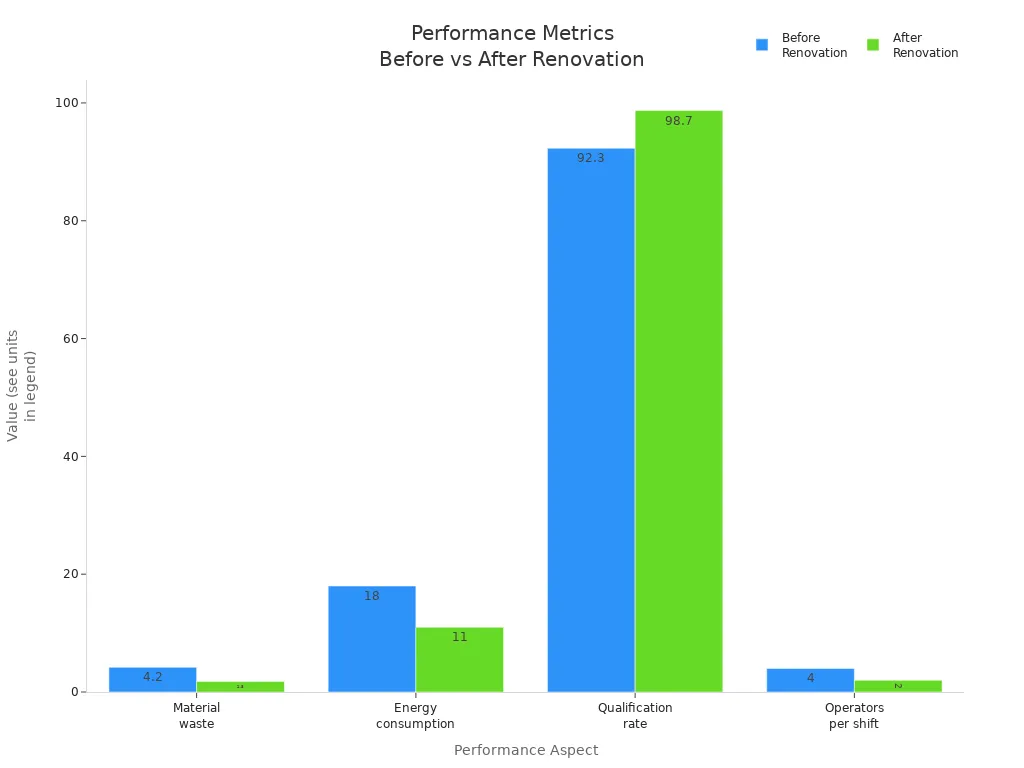
How much a machine costs and how often it needs fixing is important. High speed slitting machines cost more at first, but they can save money later. They use less power and need fewer workers. Traditional machines are cheaper to buy, but they use more power and break down more.
Metric | Traditional Machine | High-Speed Machine | Advantage |
|---|---|---|---|
Design Line Speed | 150 m/min | 450 m/min | 3x production capacity |
Daily Output (24h) | Approx. 5 tons | Approx. 15 tons | Significant economies of scale |
Operating Labor | 2 workers/shift | 1 worker/shift | Halves labor costs |
Energy Consumption per Unit | 0.45 kWh/kg | 0.35 kWh/kg | 20% electricity savings |
Waste Rate | Challenging to control | Extremely low | High raw material utilization |
Estimated Payback Period | 12 - 18 months | 9 - 14 months | Faster payback despite higher investment |
High speed machines have motors that change how much power they use. This saves electricity. Traditional machines always use the same amount of power, even when not busy. Over time, high speed machines can save money by making less waste, needing fewer workers, and not breaking as much.
High speed machines do not need fixing as often.
Good monitoring helps find problems before they get big.
Predictive maintenance keeps machines working longer without surprise stops.
Traditional machines have more moving parts, so they lose more energy and need more repairs.
These differences also change where each machine works best. High speed slitting machines are good for places that need to make lots of things fast and with good quality. Some examples are:
Medical industry: For cutting clean packaging films and wound care materials.
Electronics: For flexible circuits, tapes, and shielding.
Automotive: For inside car fabrics and protection films.
Renewables: For solar panels and battery films.
Construction and packaging: For making lots of building and packaging materials.
Traditional slitting machines are better for small factories or simple jobs. They are good for short jobs, easy materials, or when money is tight. These machines are easy to use and fix, so they are a good pick for companies that do not need to make a lot.
Tip: Companies should think about what they need to make, how much money they have, and if they want to grow. The main differences in speed, cost, and automation can help them pick the right machine.
How much you need to make is important when picking a machine. If you need to make a lot, you want a fast machine. High-speed slitting machines are good for big jobs. These machines can go over 1,000 meters each minute. They help factories finish big orders fast and stop long breaks. If you do not need to make as much, traditional machines are better. They can work with many materials and sizes without wasting things. Companies should think about how much they want to make each day and month before they pick.
If you make a lot: High-speed slitting machines are best.
If you make less: Traditional machines are a good choice.
How much money you have matters when picking a machine. The table below shows how much different machines cost and what they are good for:
Machine Type | Cost Range | Suitable For |
|---|---|---|
Precision laser slitters | Tens of thousands to over $100,000 | High-margin industries like electronics or medical devices |
Servo-driven rotary systems | $20,000–$60,000 | Packaging and converting with good speed and versatility |
Manual or semi-automatic shear slitters | Under $10,000 | Startups or businesses with limited production needs |
If a company makes a lot and does hard jobs, it may spend more on high-speed or automatic machines. Small factories or new businesses may pick traditional machines to save money.
What you need the machine to do helps you choose. You should think about what material you will cut, how thick it is, and how wide you need to cut. You also need to know how fast you want to work. Automation and control systems can make the job easier and better. It is also important to think about how easy it is to fix and get help for the machine.
What kind of material and how thick it is
How wide you need to cut
How fast you want to make things
If you want automation and control systems
How easy it is to fix and get help
"Make a checklist of what you need before talking to sellers. This will help you compare machines and pick the one that helps you work better and make good products."
Companies should look at what they need now, how much money they have, and if they want to grow. They should also think about what jobs they want to do. This careful thinking helps them pick the right slitting or cutting machine for their goals.
Manufacturers look at high speed and traditional slitting machines to see which works best for their goals. High speed machines help factories work faster and make better products when they need to make a lot. Traditional machines are easy to use and give good results for smaller jobs. The table below shows the main good and bad points:
Category | High-Speed Slitting Machines | Traditional Slitting Machines |
|---|---|---|
Advantages | Works faster, makes better products | Easy to use, gives steady results |
Saves money in busy factories | Costs less to buy | |
Disadvantages | Costs more at first, needs careful fixing | Works slower, not as good for big jobs |
Manufacturers should do these things to pick the right machine for good results:
Decide what you need to make and how good it should be.
Check how well the machine works and how neat it cuts.
Look at the price and what you get if you upgrade.
See what help you get after buying the machine.
High speed machines are best for big factories that want fast work and good products every time. Traditional machines are good for small businesses that want easy use and steady results. Each company needs to think about what it wants to get the best work and quality.
A slitting machine cuts big rolls into smaller rolls. Many factories use them for paper, film, foil, and labels. These machines help companies get the right size for their products. Slitting makes work faster and helps factories do more.
A high-speed slitting machine works much faster than old machines. It uses smart controls to cut very neatly. This machine helps save time and makes less waste. Many factories use high-speed roll-to-roll slitting for big jobs.
Slitting rewinding machines cut and roll up material at the same time. These machines keep rolls neat and ready for the next step. Many businesses use them for packaging, printing, and web slitting jobs.
Companies pick slitting rewinding machines because they are faster and make better products. These machines can handle more material and need less hand work. Slitting rewinding machines also help with automation and stop mistakes during slitting.
Yes, a slitting machine can work with many materials. Factories use them for paper, plastic, metal, and fabric. The machine settings change for each material. This makes slitting useful for many kinds of work.


